The Radical Agenda may utilize affiliate links for recommended books and resources. This means we may earn a small commission from clicks or purchases through those links at no cost to you. We only recommend products and services we believe in. All opinions shared are entirely our own. Thank you for supporting The Radical Agenda!
Who Was Wilma Mankiller, the First Female Principal Chief of Cherokee Nation?
Wilma Mankiller was the first woman to serve as Principal Chief of Cherokee Nation, leading from 1985 to 1995. She stepped into the role when the sitting chief left office, then won her own election with eighty percent of the vote in a decisive show of support for a leader who had already shown herself worthy of the title.
Her path to Principal Chief started young, and far from Oklahoma.
What Shaped Wilma Mankiller’s Early Activism?
Wilma Mankiller became an activist as a child after the Indian Relocation Act forced her family to move from Oklahoma to San Francisco when she was eleven years old. As a young woman, she took part in the Occupation of Alcatraz Island, where a group of Native Americans occupied the abandoned federal site to push the U.S. government to honor a treaty promising surplus federal land to Native peoples. That experience of displacement shaped her commitment to advocacy: Wilma Mankiller became a social worker and eventually moved back to Oklahoma to work directly with her community.
What Did Wilma Mankiller Accomplish as Principal Chief?
As Principal Chief, Wilma Mankiller drew on her social work background to expand infrastructure and services for Cherokee Nation. She led the Bell Waterline Project, which brought running water to her community for the first time, and opened multiple rural health centers along with a drug prevention program. In 1990, Wilma Mankiller signed the largest agreement in history between Cherokee Nation and the U.S. government. Under this agreement, the Bureau of Indian Affairs returned millions of dollars in federal funding to direct tribal control.
What Was Wilma Mankiller’s Legacy After Leaving Office?
Wilma Mankiller was awarded the Presidential Medal of Freedom by President Clinton in 1998, recognizing her leadership and advocacy. Her legacy continues today through the Wilma Mankiller Foundation, which runs sustainable food projects (including a working teaching farm) that supply fresh food to Cherokee communities living in food deserts.
For more on her life, see the Smithsonian Institution’s profile of Wilma Mankiller and the Oklahoma Historical Society’s encyclopedia entry.
Ready to dig into the story? Download the More to Explore workbook to increase retention of this and other books.
FAQ
When did Wilma Mankiller become Principal Chief of Cherokee Nation? Wilma Mankiller became Principal Chief in 1985 when she stepped in to replace the previous chief, then won her own election by a margin of eighty percent, serving until 1995.
What is the Bell Waterline Project? The Bell Waterline Project was an infrastructure initiative Wilma Mankiller led as Chief to bring running water to a rural Cherokee community for the first time.
Did Wilma Mankiller take part in the Occupation of Alcatraz? Yes. As a young activist, Wilma Mankiller participated in the Occupation of Alcatraz Island, where Native Americans occupied the former federal site to demand the U.S. government honor a land treaty.
What award did Wilma Mankiller receive from President Clinton? In 1998, Wilma Mankiller received the Presidential Medal of Freedom, one of the highest civilian honors in the United States, in recognition of her leadership and advocacy.
Does the Wilma Mankiller Foundation still operate today? Yes. The Wilma Mankiller Foundation continues to run sustainable food projects, including a working teaching farm supplying fresh food to Cherokee communities in food deserts.
Note: The Radical Agenda believes in supporting independent bookstores over big box stores, so we share book links using Bookshop.org. Click on the picture to order your copy of the books that catch your eye, and thank you for supporting small businesses around the country!
Click here for a full book list.
Step 3 Step into Reading: The First Woman Cherokee Chief Wilma Pearl Mankiller by Patricia Morris Buckley, illustrated by Aphelandra Messer
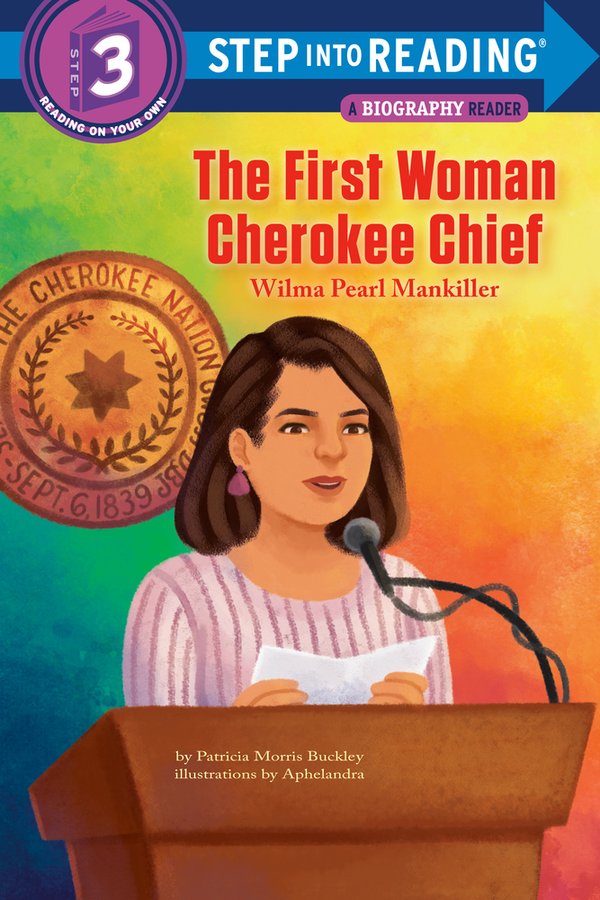
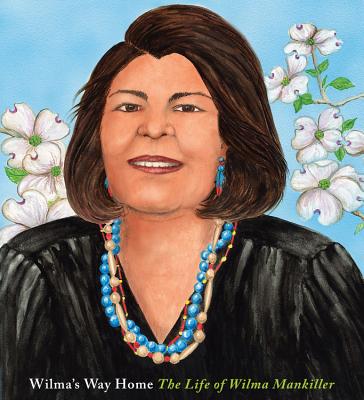
Wilma’s Way Home: The Life of Wilma Mankiller by Doreen Rappaport, illustrated by Linda Kukuk
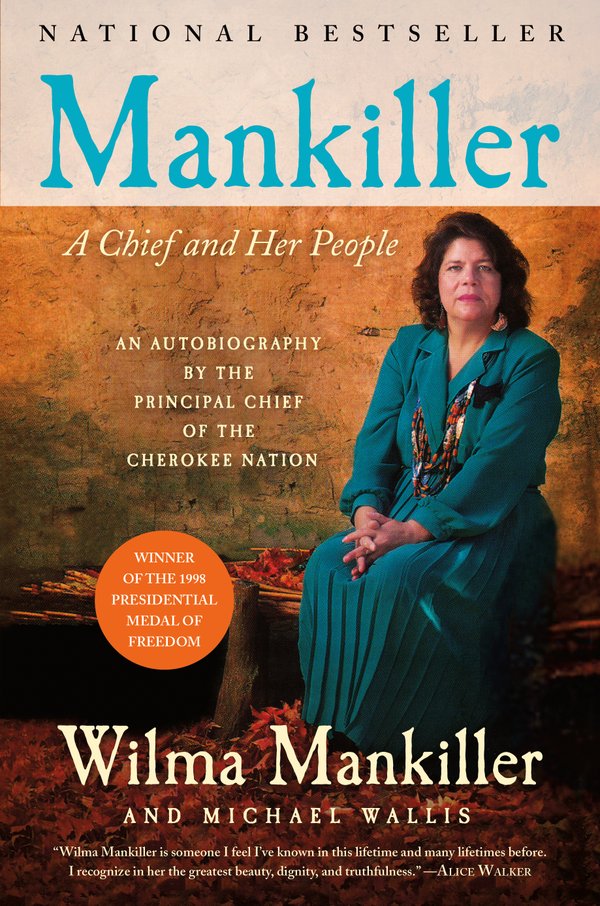
Mankiller: Chief and Her People, an Autobiography by the Principal Chief of the Cherokee Nation by Wilma Mankiller and Michael Wallis