The Radical Agenda may utilize affiliate links for recommended books and resources. This means we may earn a small commission from clicks or purchases through those links at no cost to you. We only recommend products and services we believe in. All opinions shared are entirely our own. Thank you for supporting The Radical Agenda!
What is Alcatraz Prison?
The Alcatraz prison sits on an island off of San Francisco Bay, abandoned by the government in 1963 because it was too expensive to maintain – all supplies had to be delivered by boat, including fresh water and fuel. Additionally, the salt water caused rapid deterioration of buildings. It was only operating for 29 years, but the operations cost was 3x the standard cost of prisons.
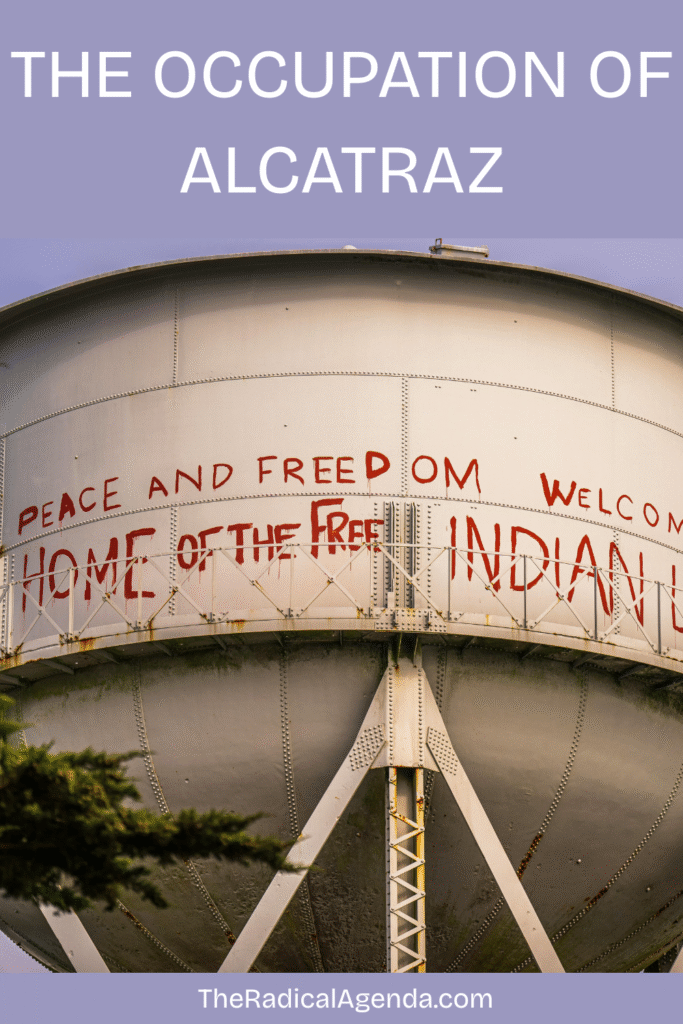
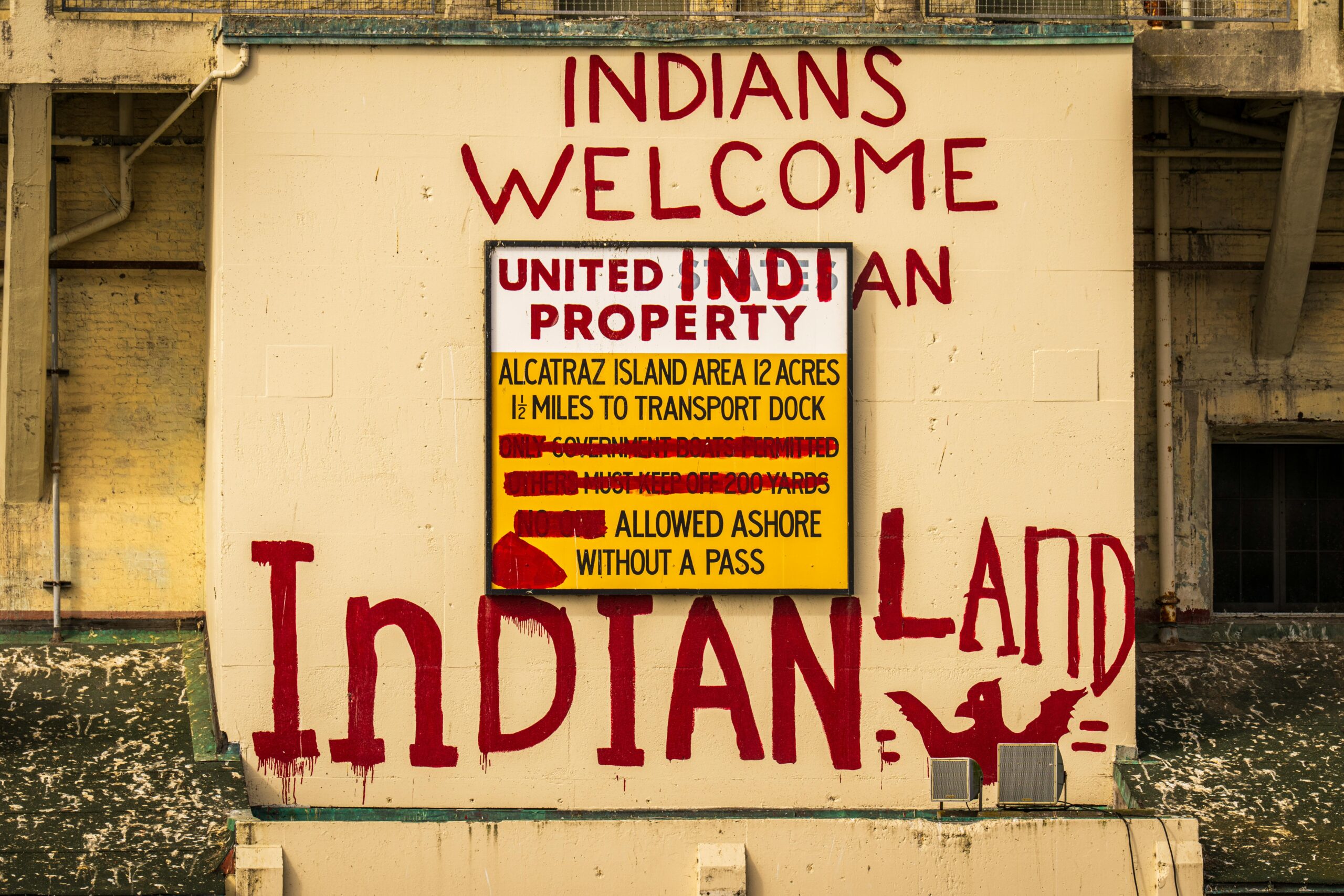
On November 20, 1969, dozens of Native students from UCLA and other young indigenous people led by Richard Oakes (Mohawk nation). They pointed to the 1868 Treaty of Fort Laramie, which stated that no part of the Black Hills reservation could be seceded without consent from the Sioux Nations to justify their occupation. The treaty was broken when gold was found in the Black Hills in 1874, and again in 1953 when Congress passed the Termination policy, allowing them to sell off land that had been designated as reservations. They organized as an egalitarian democracy with Richard as the spokesperson. Once the government agreed to official negotiations, the demands from the occupying group were simple: the deed to the island, a museum, and a Native American university and cultural center. The government denied all of these, and the occupation continued.
Others joined throughout the nineteen-month occupation, but did not share the same views and the mission began to lose focus. Richard and his wife left the island after his young step-daughter fell to her death on concrete stairs.
The government, eager to end the occupation, shut off the electricity to the island and eliminated access to fresh water. Three days later, a fire on the island destroyed historic buildings, and the official cause is still unknown. The occupiers believe the fire was caused by government agents who were looking for a reason to step in and end the movement. The government agents blamed the occupiers.
Without access to supplies, the occupiers did whatever they could to raise money to get supplies – including stripping wire and selling copper pipes. The court case turned public support for the occupiers to public distain.
President Nixon used a non-related oil tanker crash as an excuse to remove the remaining occupiers. On June 10, 1971, the FBI and several other federal agencies raided the island and removed everyone left – a total of 15 people, including four children.
Today, two of the demands have been granted: the Dept of Native American Studies at UC Davis opened, and the Golden Gate National Recreation Area was opened to the public for education.
Note: The Radical Agenda believes in supporting independent bookstores over big box stores, so we share book links using Bookshop.org. Click on the picture to order your copy of the books that catch your eye, and thank you for supporting small businesses around the country!
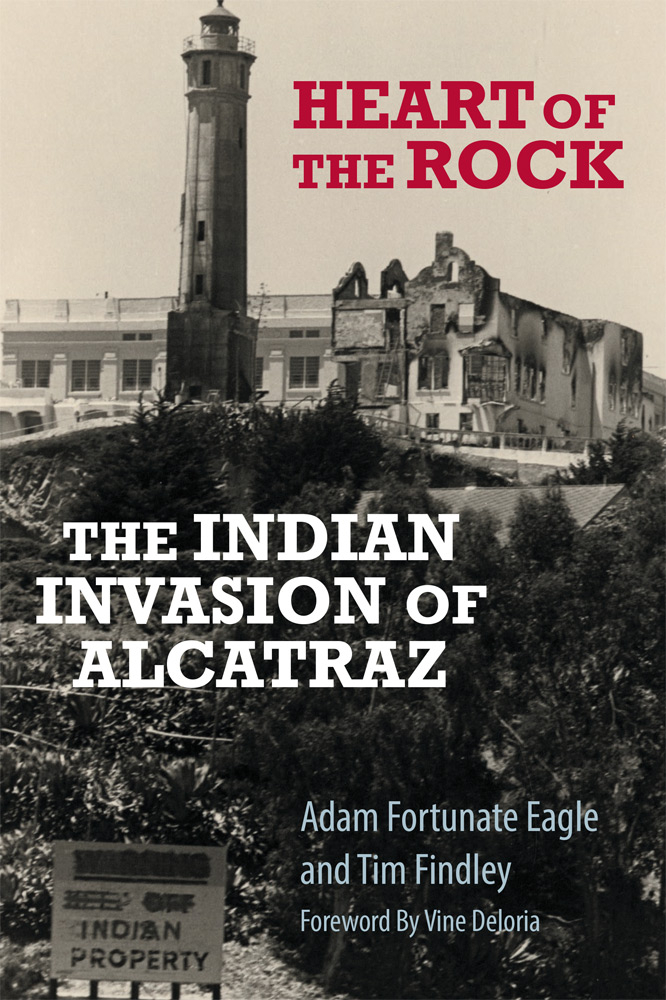
Heart of the Rock
The Indian Invasion of Alcatraz by Adam Fortunate Eagle and Tim Findley, Foreword by Vine Deloria
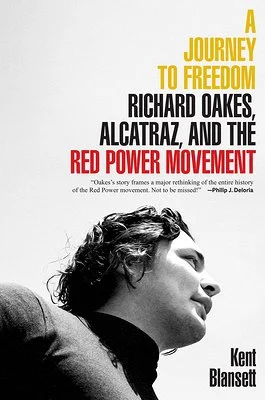
A Journey to Freedom: Richard Oakes, Alcatraz, and the Red Power Movement by Kent Blansett